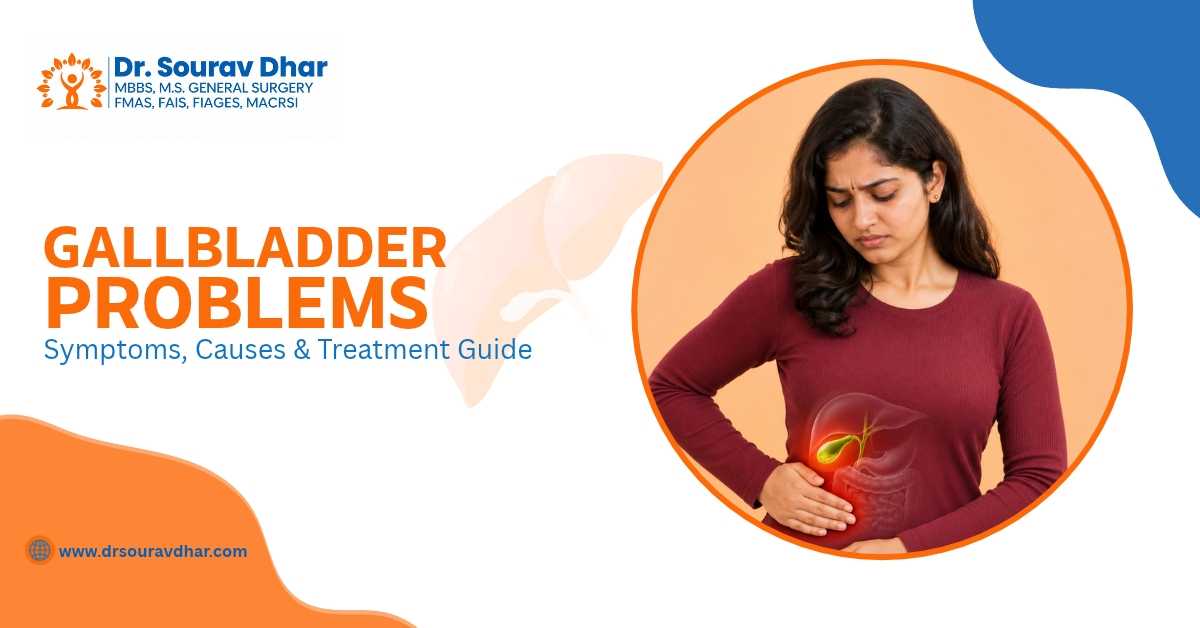

Are you experiencing a sudden, sharp pain in the upper right abdomen after a heavy meal? For many individuals, this is potentially a warning sign of gallbladder problems. Along with pain, some individuals with gallbladder problems often report unexplained nausea and persistent bloating.
Knowing when to seek gallbladder surgery in Siliguri or your convenient location can help you prevent severe complications. However, surgery may not be the only option for everyone.
This blog will shed light on the common symptoms, causes, and treatments available for gallbladder problems. On the other hand, the symptoms might vary from individual to individual, so self-diagnosis cannot guarantee the presence or absence of gallbladder problems.
Know the Common Symptoms of Gallbladder Problems
The common symptoms mentioned below are intended to improve your awareness and are not a definitive checklist for self-diagnosis.
● Sharp Abdominal Pain: A sudden, sharp pain in the upper right quadrant or center of the abdomen is one of the most common signs. Generally, the pain develops within an hour after consuming heavy meals. This is caused by the gallbladder contracting against a blockage. The pain tends to remain intense and steady, ranging from a few minutes to several hours.
● Pain Radiating to the Back or Shoulder: Gallbladder pain can travel along shared nerve pathways to other areas of the body. In many cases, patients experience a deep pain that spreads directly to the back between the shoulder blades or remains confined under the right shoulder.
● Stomach Gas and Persistent Bloating: Disruptions in the flow of bile caused by gallstones or inflammation tend to cause digestive issues in the small intestine. As a result of this, you may experience stomach gas and persistent bloating. Additionally, the discomfort generally lasts longer and is of high magnitude compared to standard digestive issues.
● Unexplained Nausea and Frequent Vomiting: The role of the gallbladder is critical in releasing bile and absorbing dietary fats. When there is an obstruction in the bile flow, you might experience nausea after eating heavy, fatty meals and can also vomit shortly after eating.
● Fever and Chills: Experiencing a sudden high fever accompanied by chills can be a warning sign of gallbladder issues. This usually happens when a gallstone blocks the exit, which causes a sudden, severe infection inside your gallbladder or bile ducts.
● Yellowing of Skin or Eyes (Jaundice): When a gallstone slips out of the gallbladder and blocks the common bile duct, there is no proper drainage of bile from the liver. This condition leads to a dangerous buildup of bilirubin in the bloodstream. The physical symptom of this condition manifests in the form of yellowing of the skin and the whites of the eyes.
● Unusually Dark Urine: When a gallstone causes obstruction in bile flow, the excess bilirubin gets released into the bloodstream. As a result of this, the kidneys attempt to filter out the high concentration of bilirubin. Hence, the urine appears dark brown or cola-colored despite maintaining proper hydration levels.
● Changes in Stool Color: A gallstone can create a physical blockage within the biliary network, which means the bile cannot reach the digestive tract to process food. This results in the stool becoming unusually pale, light grey, or a distinct clay-like appearance.
Understanding the Common Causes of Gallbladder Problems
Here are the most common causes of gallbladder problems:
● Gallstones: Gallstones develop when the cholesterol and bilirubin present in the bile crystallize and form solid deposits. The sizes of these stones can vary from tiny grains of sand to the size of a golf ball. The presence of a stone generally causes pain and dysfunction when it shifts and blocks the normal exit pathway of the fluid.
● Acute or Chronic Inflammation: Chronic inflammation can develop when a gallstone remains firmly stuck in the neck of the gallbladder or the cystic duct. This causes the bile to back up and become trapped. With the passage of time, this mechanical backup can cause irritation, tissue swelling, and increase the risk of developing secondary bacterial infections.
● Accumulation of Biliary Sludge: In some cases, the gallbladder does not empty frequently or completely. This hampered clearance leads to the bile thickening and formation of a viscous mixture known as gallbladder sludge. Although this mixture is not as hard as stones, its dense accumulation can still irritate the inner lining, restrict fluid flow, and eventually lead to stone formation.
● Blockage of Bile Duct: A clear system of ducts is crucial for transporting bile from the liver and gallbladder into the small intestine. If a stone travels out of the gallbladder and becomes firmly stuck within the common bile duct, it completely halts the digestive flow. This condition can be responsible for triggering systemic complications like jaundice or acute pancreatitis.
Treatment Options Available for Gallbladder Problems
Here are the treatment options available for gallbladder problems:
1. Acute Monitoring: If you are diagnosed with gallstones that are not causing any pain or discomfort, immediate surgery or treatment might not be necessary. Hence, when gallbladder stones are identified during routine diagnostic imaging and are not causing pain, inflammation, or obstruction, an action-oriented treatment approach is typically recommended.
Instead, active monitoring through regular clinical check-ups and abdominal ultrasounds is performed to rule out the development of complications. Additionally, awareness education is provided to patients so they can seek timely medical attention when early symptoms appear.
2. Changes in Diet and Lifestyle: If the symptoms are mild or infrequent, immediate surgical intervention may not be necessary. Generally, dietary adjustments prove to be effective in managing the mild discomfort. Since the gallbladder contracts mainly to release bile or digest fats, reducing the intake of saturated fats, fried foods, and heavily processed meals decreases the load on the organ.
Adapting a high-fibre diet rich in whole grains, lean proteins, fruits, and vegetables helps maintain smoother digestive function. However, lifestyle adjustments cannot dissolve existing gallstones and are effective for managing discomfort.
3. Non-Surgical Medical Management: In some rare clinical scenarios, non-surgical medical therapies may be considered as temporary or alternative options. Certain prescription medications can help dissolve the smaller gallstones over an extended period, provided they are not crystallized.
Generally, non-surgical medications are given to patients who are not suitable for surgery due to underlying medical conditions. Additionally, medical management requires long-term adherence, and the success rates are typically lower, with a high risk of gallstone recurrence.
4. Laparoscopic Gallbladder Surgery: Also known as Laparoscopic Gallbladder Cholecystectomy, it is a commonly used surgical procedure fortreating gallbladder problems. Additionally, it is a minimally invasive surgical procedure that removes the problematic gallbladder by making a few tiny abdominal incisions.
A gallbladder surgeon in Siliguri or near you can perform this surgery, which can result in less post-operative pain, minimal scarring, and reduced risk of wound infections. Generally, patients can return home either on the same day or the day following the surgery.
5. Traditional Open Cholecystectomy: In certain complex cases, traditional open Cholecystectomy might be necessary. This surgical method involves removing the gallbladder through a single, larger incision made in the upper right abdomen.
Open surgery is generally recommended when the patient has developed severe scarring due to previous surgeries, advanced gallbladder inflammation, or acute internal bleeding. For this type of surgery, a slightly longer hospital stay is required, but it proves to be a safe solution when laparoscopy is not clinically viable.
Final Thoughts
Gallbladder problems can significantly hamper the quality of life. However, the positive aspect is that they are highly manageable when identified early. Since the symptoms of gallbladder problems vary from individual to individual, it becomes important to watch out for critical body signals.
If you or your loved ones are experiencing abdominal discomfort, it is recommended to seek medical evaluation. Knowing the options for gallbladder surgery in Siliguri or consulting a healthcare professional near you can help you receive the right diagnosis and treatment.
FAQs:
Q. Can a gallbladder stone be treated without undergoing surgery?
Answer: Yes, in certain cases, gallbladder problems can be managed without immediate surgery. Generally, asymptomatic gallstones require active monitoring, while mild symptoms can be managed with dietary and lifestyle modifications. Oral medications are mostly prescribed when the patient cannot undergo surgery due to underlying medical conditions.
Q. How long does it take to recover after laparoscopic gallbladder surgery?
Answer: A laparoscopic gallbladder surgery generally promotes a fast recovery, with most patients returning home either on the same day or the day following the surgery. Regular desk work and light walking can typically be resumed within 3 to 7 days.
Q. What will happen if my gallbladder is completely removed?
Answer: After your gallbladder is completely removed, the liver continues to produce bile to digest food. However, some individuals may experience temporary digestive adjustments or milder stools initially.
Q. When should I seek gallbladder surgery?
Answer: Gallbladder surgery becomes a necessity if you experience recurring episodes of intense abdominal pain, persistent nausea, or severe bloating after meals and have been diagnosed with symptomatic gallstones.
Q. Is gallbladder problem life-threatening?
Answer: A routine gallbladder problem is generally not immediately life-threatening, but it can become dangerous if left untreated. Generally, serious and potentially life-threatening complications can arise if a gallstone causes a prolonged blockage or a severe bacterial infection.